
How Is Dog Anxiety Treated? Vet Explains
|
|
Time to read 13 min


Loved by 50k+ pet parents


Loved by 50k+ pet parents


Loved by 50k+ pet parents


Loved by 50k+ pet parents
|
|
Time to read 13 min
Dog anxiety is usually treated with a combination of reducing or managing triggers, behavior modification, environmental changes, and, when appropriate, medication. The exact approach depends on what is making the dog anxious, how severe their response is, and whether the anxiety happens occasionally or affects everyday life.
That last point matters. There is a big difference between a dog who becomes unsettled during thunderstorms and one who panics every time their owner leaves the house. There is also a difference between a naturally cautious dog and a dog who has suddenly become anxious because they are in pain or developing a medical problem.
During my years in veterinary practice, one thing I learned quickly was that treating anxiety is rarely about finding the one magic calming product. Owners understandably want something that will make their dog feel better quickly, but successful treatment is more often a carefully assembled jigsaw puzzle. We work out what is driving the anxiety, prevent the dog from repeatedly becoming overwhelmed, and then help them learn that the situation is safer than they previously believed.
For some dogs, that may primarily involve training and changes at home. For others, medication can make an enormous difference. And for many, the most effective answer lies somewhere in between.
Dog anxiety treatment should be tailored to the cause, triggers, severity, and individual dog.
A veterinary examination is important, particularly when anxiety appears suddenly or changes significantly, because pain and illness can affect behavior.
Avoiding or reducing overwhelming situations is part of treatment, not simply "giving in" to an anxious dog.
Desensitization and counterconditioning are two of the most useful behavior-modification techniques for many fears and anxieties.
Prescription medication may be used for persistent anxiety or for predictable stressful events such as fireworks, travel, or veterinary visits.
Medication generally works best as part of a broader treatment plan rather than as a replacement for behavioral work.
Supplements and calming products may help some dogs, but the quality of evidence varies considerably between products.
Severe anxiety, panic, aggression, self-injury, or anxiety that significantly affects quality of life warrants professional veterinary and behavioral support.
Table of Contents

Before deciding how to treat dog anxiety, we need to understand what we are treating.
"Anxiety" describes an emotional state, rather than a single disease. Dogs can become anxious for very different reasons, including separation from their caregivers, loud noises, unfamiliar people or dogs, travel, veterinary visits, previous frightening experiences, changes at home, or general difficulty coping with unpredictable situations.
The treatment for a dog frightened by fireworks will therefore look different from the treatment for a dog with separation anxiety.
There is another important consideration: medical problems can change behavior.
Pain, neurological disease, sensory decline, hormonal disorders, gastrointestinal discomfort, urinary problems, and canine cognitive dysfunction can all potentially contribute to behavioral changes. That's why I would be particularly keen for a veterinarian to examine a dog whose anxiety has appeared suddenly, especially an older dog who has previously been confident.
The aim isn't simply to label the dog "anxious." It's to find out when, where, why, and how severely the anxiety occurs.
Videos can be surprisingly useful here. For example, recording a dog after you leave home can help distinguish true separation-related distress from boredom, outside triggers, or other behavioral problems. Veterinary behavior guidelines specifically recognize video and behavioral logs as useful tools when assessing separation-related problems.
One of the first steps in treating anxiety is often management: reducing exposure to situations that repeatedly push the dog beyond what they can cope with.
This sometimes feels counterintuitive to owners. If your dog is frightened of other dogs, shouldn't you expose them to lots of dogs until they realize everything is fine?
Unfortunately, repeatedly overwhelming a frightened dog can have precisely the opposite effect.
Imagine being terrified of spiders and being locked in a room containing 100 of them. You probably wouldn't emerge thinking, "Well, that cured me." You might emerge considerably more convinced that rooms are dangerous.
Dogs can experience something similar.
For a noise-sensitive dog, management might involve creating a quiet safe space during storms or fireworks. For a dog frightened of strangers, it might mean giving them distance from visitors rather than insisting they interact. For separation anxiety, it can involve temporarily arranging daycare, family help, pet sitters, or other solutions while treatment begins.
The American Animal Hospital Association's behavior guidelines describe avoidance and safety as cornerstones of behavioral treatment, alongside environmental management, behavior modification, and medication when appropriate.
Management doesn't necessarily mean avoiding the trigger forever. It means stopping repeated panic while you teach the dog a different emotional response.
Behavior modification is one of the foundations of anxiety treatment.
Two terms you will hear frequently are desensitization and counterconditioning.
Desensitization means exposing the dog to such a mild version of their trigger that they remain comfortable, then gradually increasing the intensity as they become more confident.
Counterconditioning means pairing the trigger with something the dog enjoys, so their emotional association begins to change.
Suppose your dog is frightened when the vacuum cleaner starts.
Rather than switching it on beside them and hoping they eventually get used to it, you might begin with the vacuum sitting motionless across the room while the dog receives something enjoyable. Later, it might move without being switched on. Eventually, the sound could be introduced from another room.
The crucial ingredient is staying below the dog's fear threshold.
If the dog stops eating, freezes, tries to escape, barks frantically, lunges, or otherwise becomes significantly distressed, the exercise has probably progressed too quickly.
AAHA guidelines recommend gradual desensitization and counterconditioning for fearful and reactive animals and emphasize rewarding desirable behavior rather than using aversive techniques.
Anxiety-driven behavior can be incredibly frustrating. A dog may bark, destroy furniture, urinate indoors, refuse to walk, or react aggressively.
But punishment doesn't address the underlying emotion.
If a dog destroys the door because they panicked when left alone, telling them off when you return doesn't teach them to feel safe alone. At best, the punishment is unrelated to the original emotional problem. At worst, it adds another source of uncertainty and fear.
The same principle applies to leash corrections, shouting, shock collars, or deliberately forcing frightened dogs toward whatever scares them.
Modern veterinary behavioral guidance favors humane, reward-based approaches and advises against aversive techniques when modifying fearful or problematic behavior.
That doesn't mean anxious dogs should never have boundaries. Predictable routines and clear communication can be very reassuring. The distinction is between teaching a dog what you would like them to do and punishing them for experiencing fear.
Medication can be extremely useful for some anxious dogs.
I sometimes hear owners worry that using medication means they have "failed" at training. I don't see it that way.
A dog experiencing severe anxiety may be so emotionally aroused that learning becomes extremely difficult. Medication can reduce that intensity enough for behavioral treatment to become possible.
There are broadly two ways anxiety medications may be used.
Daily medications are commonly considered when anxiety is frequent or persistent. Drugs used in veterinary behavioral medicine include selective serotonin reuptake inhibitors (SSRIs), such as fluoxetine, and tricyclic antidepressants, such as clomipramine.
In the United States, fluoxetine and clomipramine have specifically been approved for canine separation anxiety. Controlled studies support their use alongside behavioral modification, and a 2024 evidence review concluded that both fluoxetine and clomipramine can reduce anxiety-related behaviors, although there was insufficient evidence to say that one is generally superior to the other.
Some daily behavioral medications take several weeks to produce their full effect, so they shouldn't necessarily be judged after only a few days.
Situational medications, meanwhile, can be used around predictable stressful events. Depending on the dog and circumstances, veterinarians may prescribe medications such as trazodone, gabapentin, benzodiazepines, clonidine, or dexmedetomidine.
There is good evidence for dexmedetomidine oromucosal gel in dogs with noise-related fear. In a randomized placebo-controlled study involving dogs exposed to New Year's Eve fireworks, owners rated the treatment effect as good or excellent in 72% of dogs receiving dexmedetomidine compared with 37% receiving placebo.
Medication choice depends on the individual dog, their medical history, other medications they take, and the particular type of anxiety being treated. These drugs should therefore be prescribed and monitored by a veterinarian rather than borrowed from another pet or taken from a human medicine cabinet.
This is an important distinction.
The goal of anxiety medication is generally anxiolysis, meaning reducing anxiety, rather than simply sedating the dog.
A heavily sedated dog can still potentially feel frightened. They may simply be less able to physically express it.
Good behavioral treatment asks, "Does this dog feel better?" rather than merely, "Is this dog quieter?"
This is one reason veterinarians often recommend trying situational medication before the major event. We want to know how that particular dog responds rather than discovering during a thunderstorm, flight, or fireworks display that the chosen dose isn't producing the desired effect.
Research into dexmedetomidine during veterinary visits illustrates this principle nicely. In one randomized placebo-controlled study, treated dogs displayed more relaxed behavior and posture, while the researchers reported that the dogs were not sedated.
The shelves of pet stores are overflowing with calming chews, powders, pheromones, herbal products, special diets, and supplements. Unfortunately, the evidence doesn't always keep pace with the marketing.
Some ingredients are promising, and individual dogs may benefit, but I would be cautious about assuming that "natural" automatically means effective or risk-free.
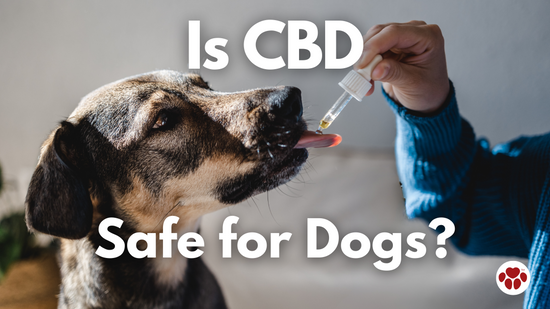
Cannabidiol (CBD), for example, has attracted considerable research interest. A 2023 study found that a single dose of THC-free CBD influenced some physiological and behavioral measures of canine stress during separation and car travel, although effects varied depending on the measure being examined.
A later study involving repeated car journeys similarly found improvements in some stress measures in CBD-treated dogs but emphasized that further research is needed across different dog populations and stressors.
More recent research evaluating treats containing CBD, L-tryptophan, and α-casozepine has also reported mild stress-reducing effects, rather than suggesting these products are equivalent to established treatment for significant anxiety.
That's roughly where I would place calming supplements clinically: potentially useful as one part of a treatment plan, particularly for mild or situational stress, but not something I would rely upon alone for a dog experiencing severe anxiety or panic.

Anxiety treatment isn't confined to training sessions and medicine bottles.
A dog's everyday environment influences their ability to cope.
Appropriate physical exercise, opportunities to sniff and explore, food enrichment, problem-solving activities, adequate sleep, predictable routines, and safe places to retreat can all support emotional wellbeing.
The word appropriate is important.
Trying to exhaust an anxious dog isn't treatment. In fact, continually piling stimulation onto a dog who already struggles to settle may be counterproductive.
Instead, think about balancing physical activity with calming activities that encourage the dog to use their brain and nose. Sniffing walks, scatter feeding, food puzzles, gentle training sessions, and chewing opportunities may all have a place depending on the individual.
There isn't one timetable.
A dog with a mild, specific fear may improve relatively quickly. A dog with severe separation anxiety, multiple fears, or a long history of panic may need months of structured treatment.
Progress is rarely perfectly linear either.
You might have three excellent weeks followed by a thunderstorm, house move, illness, or other disruption that temporarily sets things back. That doesn't necessarily mean treatment has failed.
Instead of looking only for complete disappearance of anxiety, I encourage owners to watch for smaller objective improvements.
Is the dog recovering more quickly after being startled? Can they stay alone for longer before becoming distressed? Are they able to eat around a previously frightening trigger? Is their barking shorter or less intense? Can they disengage from something that worries them?
Those changes matter.
Regular reassessment is also important. Veterinary behavioral guidelines recommend ongoing follow-up and adjustment rather than treating anxiety as a "prescribe once and forget" condition.
Many anxiety problems can initially be managed by a primary-care veterinarian working alongside a suitably qualified reward-based trainer or behavior professional.
More complicated cases may benefit from a veterinary behaviorist.
I would particularly consider specialist input when anxiety is severe, several anxiety disorders appear to overlap, previous treatment hasn't worked, medication management is becoming complicated, or fear is associated with aggression or a risk of injury.
Dogs who injure themselves trying to escape, completely stop functioning around triggers, or experience frequent panic shouldn't simply be left to "get used to it."
Anxiety is a welfare issue. If fear is repeatedly interfering with normal activities such as eating, sleeping, walking, being left alone, interacting with family members, or receiving veterinary care, it deserves proper treatment.
There isn't one treatment that is best for every dog. Effective treatment usually combines trigger management, behavior modification, environmental support, and medication when appropriate. The best plan depends on the type and severity of anxiety and the dog's overall health.
Some dogs improve to the point that their previous anxiety has very little impact on everyday life. Others, particularly dogs with longstanding or generalized anxiety, may always require some degree of management. The realistic goal is usually to reduce fear, improve coping ability, and give the dog a good quality of life.
Sometimes. Dogs with mild or very specific fears may respond well to environmental management and structured behavior modification alone. However, avoiding medication purely because it feels like a "last resort" can disadvantage dogs experiencing significant distress. For some dogs, medication makes behavioral treatment substantially easier.
Providing distance from the trigger, a predictable routine, adequate rest, appropriate exercise, enrichment, and a safe retreat can all help. Some supplements may also provide modest benefits. However, severe anxiety shouldn't be treated solely with home remedies without veterinary assessment.
Yes. You don't need to ignore a frightened dog because you're worried about "rewarding fear." If your dog seeks calm physical contact or reassurance from you, providing it is reasonable. What matters is remaining calm yourself and avoiding forcing interaction if your dog would rather retreat somewhere safe.
It depends on the medication. Situational medications may be intended to work within hours, while some daily medications can take several weeks to reach their full therapeutic effect. AAHA guidance notes that some behavioral medications may require approximately five to eight weeks before their treatment effects become apparent.
The aim isn't to change who your dog is. Appropriate treatment should reduce pathological fear and help your dog function more comfortably. Excessive sedation, marked agitation, appetite changes, gastrointestinal signs, or concerning behavioral changes should be discussed with the prescribing veterinarian.
Seek prompt veterinary advice if anxiety appears suddenly alongside other signs of illness, if your dog is injuring themselves, cannot settle for prolonged periods, stops eating or drinking, becomes dangerously aggressive, or experiences extreme panic. Sudden behavioral change can sometimes indicate an underlying medical problem rather than a purely behavioral disorder.
Treating anxiety isn't about creating a dog who never feels frightened. Fear is a normal and useful emotion. The problem arises when that fear becomes excessive, persistent, or begins interfering with normal life.
The most successful treatment plans usually work on several fronts at once. We reduce unnecessary exposure to overwhelming situations, investigate medical contributors, change the dog's emotional response through careful behavioral work, improve their everyday environment, and use medication when the level of distress justifies it.
Most importantly, treatment should progress at the dog's pace, not according to how quickly we would like the problem solved.
An anxious dog isn't being stubborn, dramatic, or difficult. Their nervous system is telling them that something isn't safe. Good treatment doesn't simply suppress the resulting behavior. It helps change that underlying message from "I can't cope with this" toward "I've experienced this before, I know what to do, and I'm safe."

Dr. Kathryn Dench
With nearly two decades of experience, Cambridge veterinarian Dr. Kathryn Dench is dedicated to enhancing animal health through holistic practices. A member of the Royal College of Veterinary Surgeons, she focuses on preventive care over traditional methods, particularly for long-term wellness solutions in pets suffering from anxiety and chronic conditions. As Chief Scientific Advisor at Paw Origins, she champions holistic strategies and education to revolutionize pet care practices.