Cambridge Veterinarian Reveals Why Your Dog Panics The Moment You Leave The House: The "Departure Alarm" Big Pharma Doesn't Want Vets Talking About
 Tue, Sep. 29th, 2026 | 10:14 am EST
Written by Dr. Kathryn Dench, MA VetMB, MRCVS | Cambridge-Trained Veterinarian


Dear Friend Who Can't Leave Their Dog Alone,
If you've sat in your car outside your own home, watching the camera app, because the howling started before you'd even reached the driveway...
If you've turned down dinners, trips, even a promotion, because nobody can be home with the dog...
If you've come home to a note from a neighbor, or opened a letter from your landlord with your stomach already in a knot...
Then what I'm about to share could save you from another year of racing home at lunch, a crate your dog fights every single day, and a prescription that quiets the panic by quieting everything else.
But I need to warn you.
What you're about to read will make you angry.
Because the reason your dog starts to panic before the door even closes has been sitting in plain sight the whole time.
Not because the science doesn't exist.
Because it costs almost nothing to support, and a $6 billion pet pharmaceutical and calming industry has no reason to tell you that.
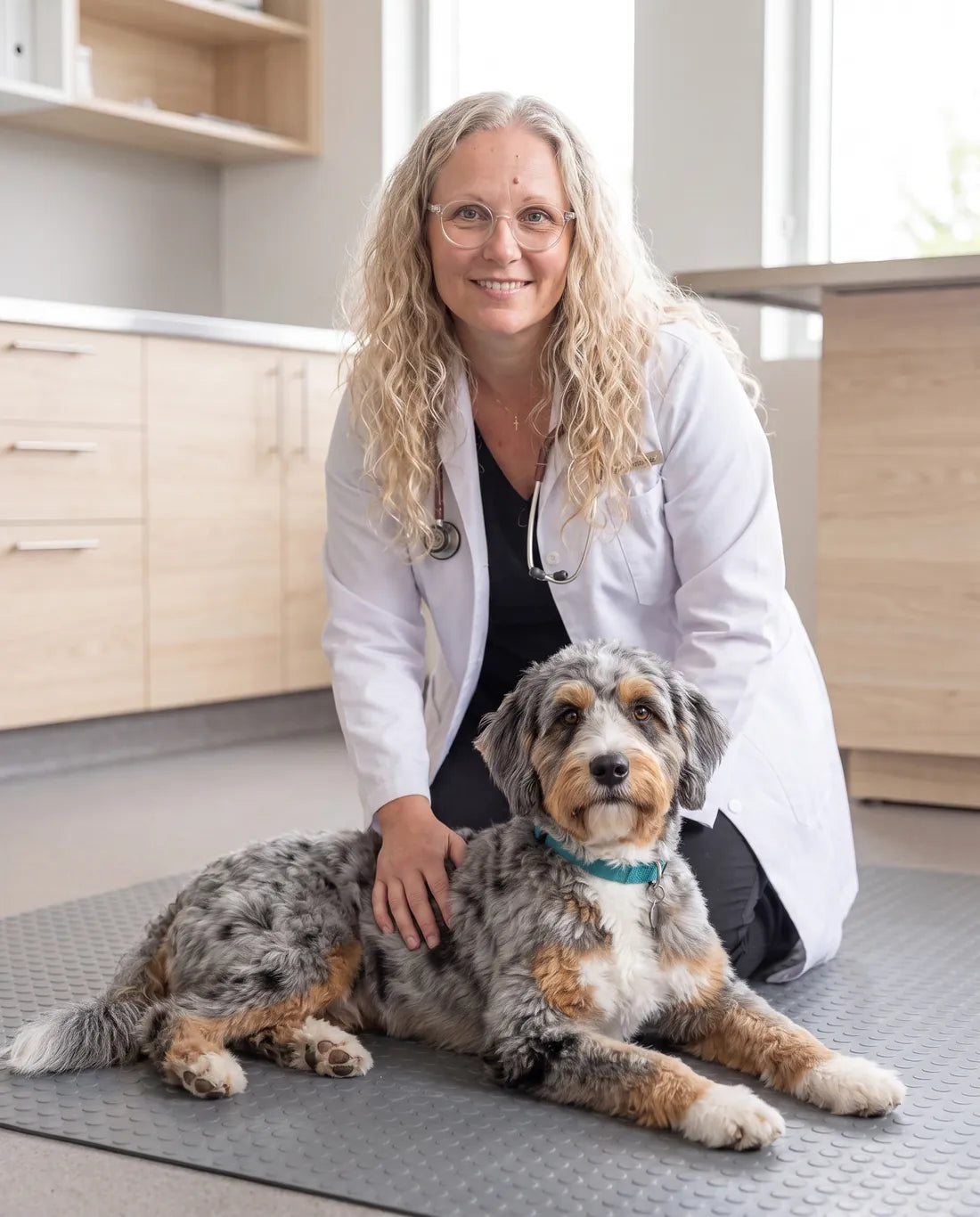
My name is Dr. Kathryn Dench.
I'm a Cambridge-trained veterinarian with nearly two decades of clinical experience: private practice, wildlife conservation, and clinical research.
I've seen thousands of dogs who come apart when they're left alone, and the owners whose lives have shrunk to fit around them.
And for most of my career, I prescribed exactly what I was trained to prescribe.
Until one case changed how I think about all of it.
THE MONDAY BACK AT THE OFFICE
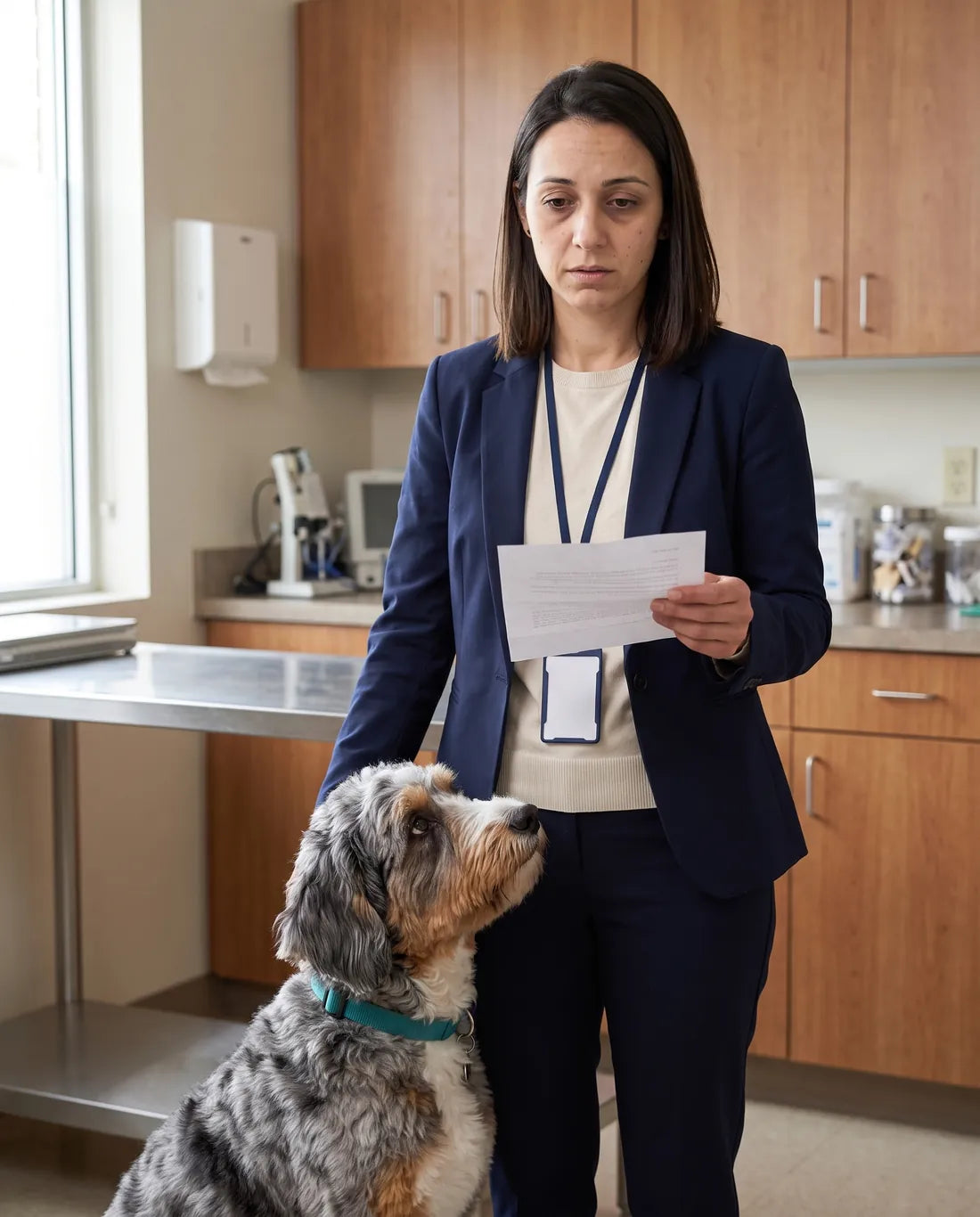
It was a Monday morning, the start of her third week back at the office.
A woman named Dana came in with her dog, Milo. A 5-year-old blue merle Aussiedoodle, 45 pounds, bought as a puppy in lockdown, when everybody was home all day.
Milo had never been left alone for more than an hour. He'd never needed to be.
Then her company called everyone back, four days a week.
By the second week, a neighbor had filmed six hours of howling through the wall and sent her the video.
By the third, Milo had broken a tooth on the bars of his crate door. And her landlord had given her 30 days to fix it or move out.
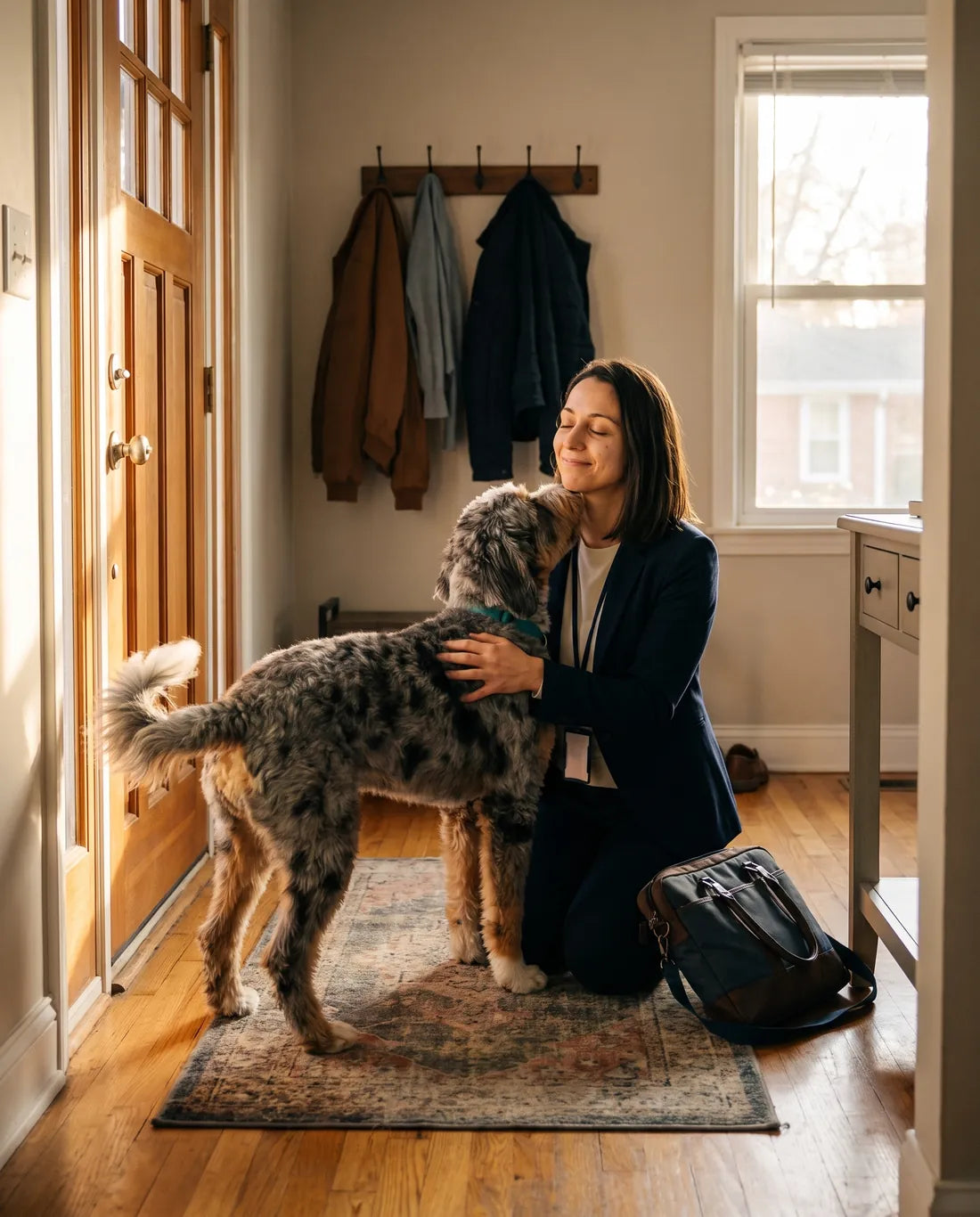
She was dressed for work, lanyard still around her neck, the landlord's letter folded in her hand. Milo was pressed so hard against her legs she could barely stand.
She looked at me and said, "Do I have to choose between my job and my dog?"
She's far from the only one asking. When the Royal Veterinary College followed puppies bought in the UK in 2020, almost a third (30.9%) were reported to show separation-related behavior by 21 months old.
Here's what destroyed me:
I'd seen Milo twice since the howling started. Both times I told Dana the same thing: crate training and patience. Then a longer walk before work, to tire him out.
It's the advice I'd given hundreds of owners. I never once asked the question that actually mattered. Why does a healthy, well-walked dog fall apart the moment his person walks out the door?
The crate: Every guide said a crate would feel like a safe den. Milo fought it from the moment it clicked shut. He bent the door and broke a tooth trying to get out.
The Kong and the TV: A frozen Kong packed with peanut butter, the TV left on for company. Every evening she came home to find the Kong untouched. A panicking dog doesn't eat.
The medication conversation: I had the prescription written before she sat down. Dana asked me what it would do to him. Then she asked whether he'd still meet her at the door.
That was the moment something in me shifted.
I didn't have a good answer to either question. And I wasn't going to keep prescribing my way around a question I'd never actually answered.
THE MIND-BLOWING DISCOVERY

For the next several months, I went back to the research the way I hadn't since vet school.
I read everything I could find on dogs who can't be left alone. Called colleagues doing work on the endocannabinoid system, a system most veterinary programs barely cover, because the science has moved faster than the curriculum.
And one study stopped me cold. Researchers filmed 23 dogs with separation problems after their owners walked out. Most showed signs of distress within 10 minutes. On average, the vocalizing started about three minutes after the door closed.
These dogs weren't bored. They weren't spiteful, and they weren't badly trained. Something was going off in the first minutes and never switching back off.
Here's what I found that nobody had explained to Dana, or to the hundreds of owners before her:
Your dog's brain has an alarm for exactly this moment: the person it relies on walking away. That alarm is normal. Every dog has it.
In a settled dog, the alarm fires, then something dials it back. The dog paces for a minute, sighs, and goes to sleep on the couch.
In dogs like Milo, the alarm never gets the signal to stand down. So they spend the whole absence in panic.
This isn't a training problem. It's an alarm problem.
THE REAL ROOT CAUSE: DEPARTURE ALARM SYNDROME
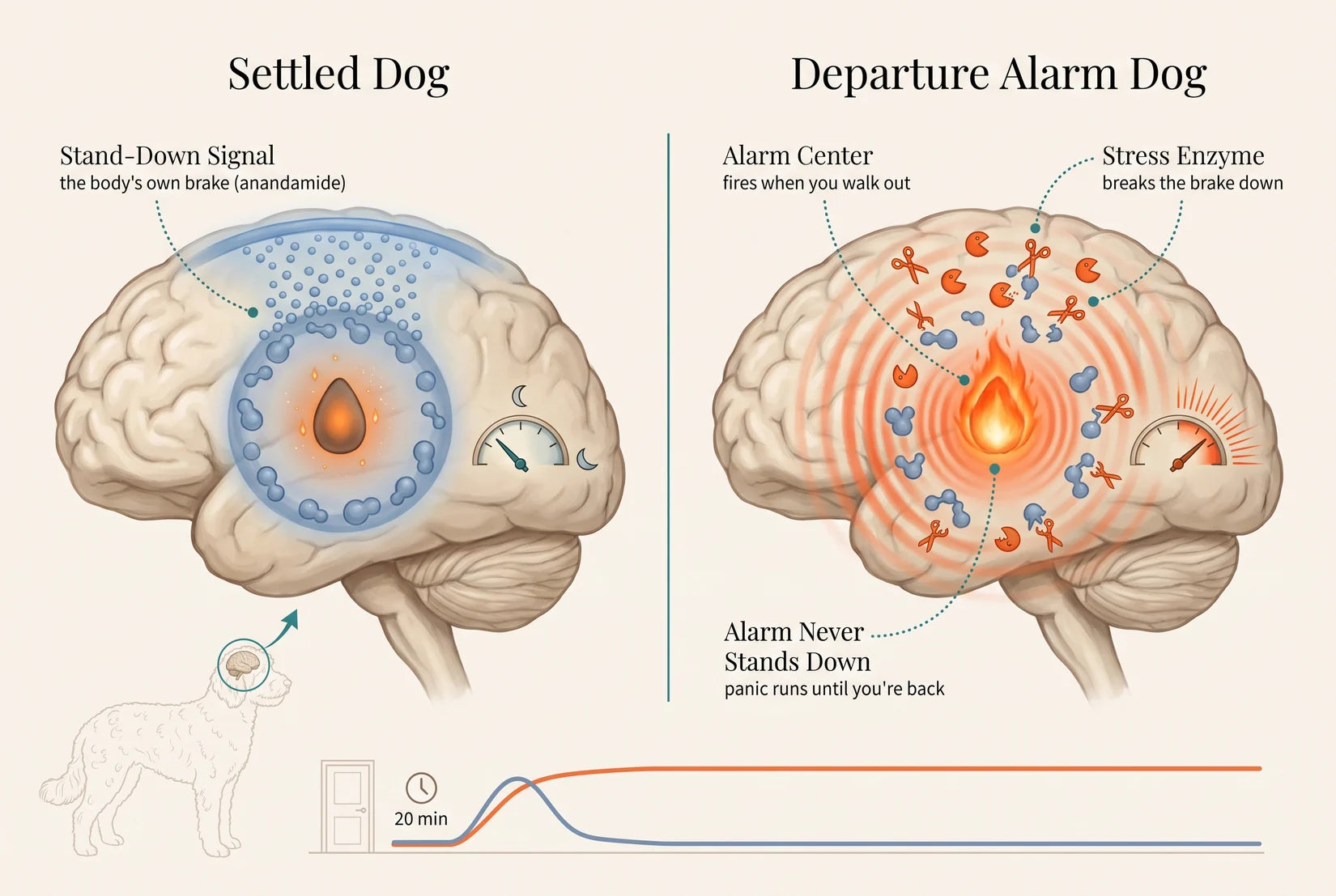
Deep inside every dog's brain and body sits a system most veterinarians barely mention, because they weren't taught to focus on it: the endocannabinoid system, or ECS.
It runs on compounds the dog's own body makes, including anandamide, nicknamed the bliss molecule.
One of its jobs is the stand-down signal: once a stressful moment has passed, it helps dial the body's alarm back to calm.
When it's working properly, the door closes, the alarm rises, and then it settles. Twenty minutes later, the dog is napping.
Here's what nobody had explained to Dana. In lab research on rats and mice, anandamide acts like a brake on the stress response. When stress hits, the brain switches on an enzyme that breaks anandamide down in its fear center, and the brake comes off.
When the stand-down signal can't keep up, nothing switches the alarm back off.
I call it Departure Alarm Syndrome, because of exactly when it strikes.
As it progresses, three things happen at once:
- The alarm starts before the door closes. The dog learns the cues. Your shoes go on, your bag comes off the hook, your coat comes out, and the panic starts while you're still in the room.
- It peaks early and never comes down. In that video study, most dogs showed distress within 10 minutes of the owner leaving, and the panting tended to climb as time went on, not settle. With nothing to dial it back, it runs on until you walk back in.
- The house shrinks. The alarm starts a little earlier every week. And your life narrows around it: shorter errands, fewer dinners out, the camera open on your phone all day.
What Departure Alarm Syndrome looks like at home:
1. The goodbye spiral. Pacing, whining and shadowing you from room to room as soon as you pick up your bag.
2. The empty-house howl. The neighbors hear it. The camera shows it. It starts within minutes of the door closing.
3. The damage at the exit. Chewed blinds, claw marks on the front door, a bent crate, the carpet torn up by the door, and accidents from a dog who has been house-trained for years.
Once I understood that, everything about how separation anxiety gets treated stopped making sense to me.
THE STAND-DOWN FIX HIDING IN PLAIN SIGHT
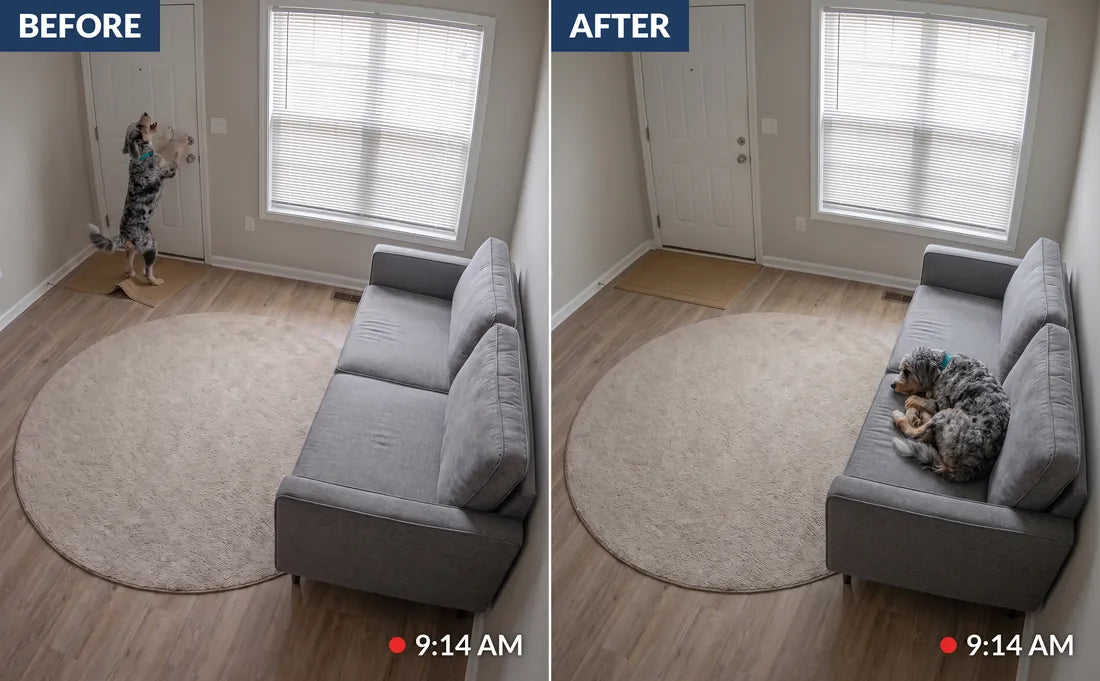
Remember Milo, and the landlord's letter in Dana's hand?
Six weeks later, Dana sent me a clip from her pet camera.
She'd left at 8:54. The clip is from 9:14, twenty minutes after the door closed. Milo is asleep on the couch.
Not sedated. Not worn out from a two-hour run. Asleep, the way a dog sleeps when the alarm has stood down. The landlord never sent a second letter.

To actually support a dog through Departure Alarm Syndrome, not just contain them through it, three things have to happen at once:
REPLENISH THE ECS - Full-spectrum cannabinoid compounds work with the same receptors the body's own bliss molecule uses, supporting the stand-down signal an overworked system struggles to send on its own.
This is the entourage effect, the reason full-spectrum formulas work where isolate CBD doesn't. Isolate is missing the surrounding compound profile that makes the binding effective.
ACTUALLY DELIVER IT - Most calming products fail on bioavailability, not just concentration.
Without an effective carrier, active compounds get broken down in digestion before they ever reach the bloodstream, let alone the brain.
SUSTAIN IT DAILY - An alarm this practiced doesn't reset in one dose, or only on the mornings you remember. Daily support, given with breakfast before you leave, is what lets the ECS settle into a calmer baseline over weeks, not hours.
Miss even one of these, and you're wasting your time.
That's why the crate alone doesn't work. (A crate can be a den for a calm dog. Shut a panicking dog inside one and you've added being trapped to the panic.)
That's why training alone doesn't work. (Training asks a dog to learn that you always come back. A dog in full panic isn't learning anything. He's just getting through the next minute.)
That's why medication alone doesn't fix it. (It overrides the whole system instead of supporting it. The panic goes quiet, and too often the personality goes with it.)
You need all three, at the same time, sustained daily.
That's exactly what I set out to build.
THIS IS QUIETLY INCONVENIENT FOR AN INDUSTRY

After Milo's turnaround, word moved through Dana's office faster than I expected. Half her floor had a lockdown dog at home.
A colleague of mine, Dr. Marcus Reid, a small-animal vet, had a client who was an ER nurse on 12-hour shifts. Her dog howled from the moment she left to the moment she got home, and she was days away from rehoming him. He called me on a Sunday night.
"Kathryn. That Aussiedoodle. Walk me through exactly what you did."
Six weeks later, the nurse took her dog's rehoming listing down. She kept him.
Then it was Jen, who runs a dog daycare that sees about 40 dogs a day.
Every daycare has a few who sit at the window and cry from drop-off to pickup. Jen started asking the owners of hers about ECS support at home.
"The change shows up at drop-off," she told me. "They used to fall apart when the car pulled away. Now they turn around and go play."
Within a couple of months, I had messages from owners I'd never met. People who had been told the next step was a prescription, looking for something to try first.
Every single one saw the same pattern: calmer goodbyes, same dog at the door.
That's roughly when the conversations at conferences started getting a little less friendly.
WHEN YOU CHALLENGE A $6 BILLION INDUSTRY
A department head I'd worked alongside for years pulled me aside after a talk. "Kathryn, medicate-and-crate is the default protocol for a reason. You're telling owners to try something else first. That's not going to make you popular."
He wasn't wrong. That's rather the point.
Here's what ECS support actually threatens, if it works the way the research says it does:
- It supports the system behind the panic, not just the symptom
- It works without sedating a dog, or dulling who they are
- It's something an owner can start today, without a prescription, a referral, or a waitlist
None of that is a great business model for anyone whose revenue depends on monthly prescriptions, recheck visits and behavior programs.
But it's exactly why I partnered with PawOrigins, because the research deserved to reach the owners who actually needed it, not stay buried in a journal nobody outside the field reads.
INTRODUCING HAPPY-FUREVER®
OIL
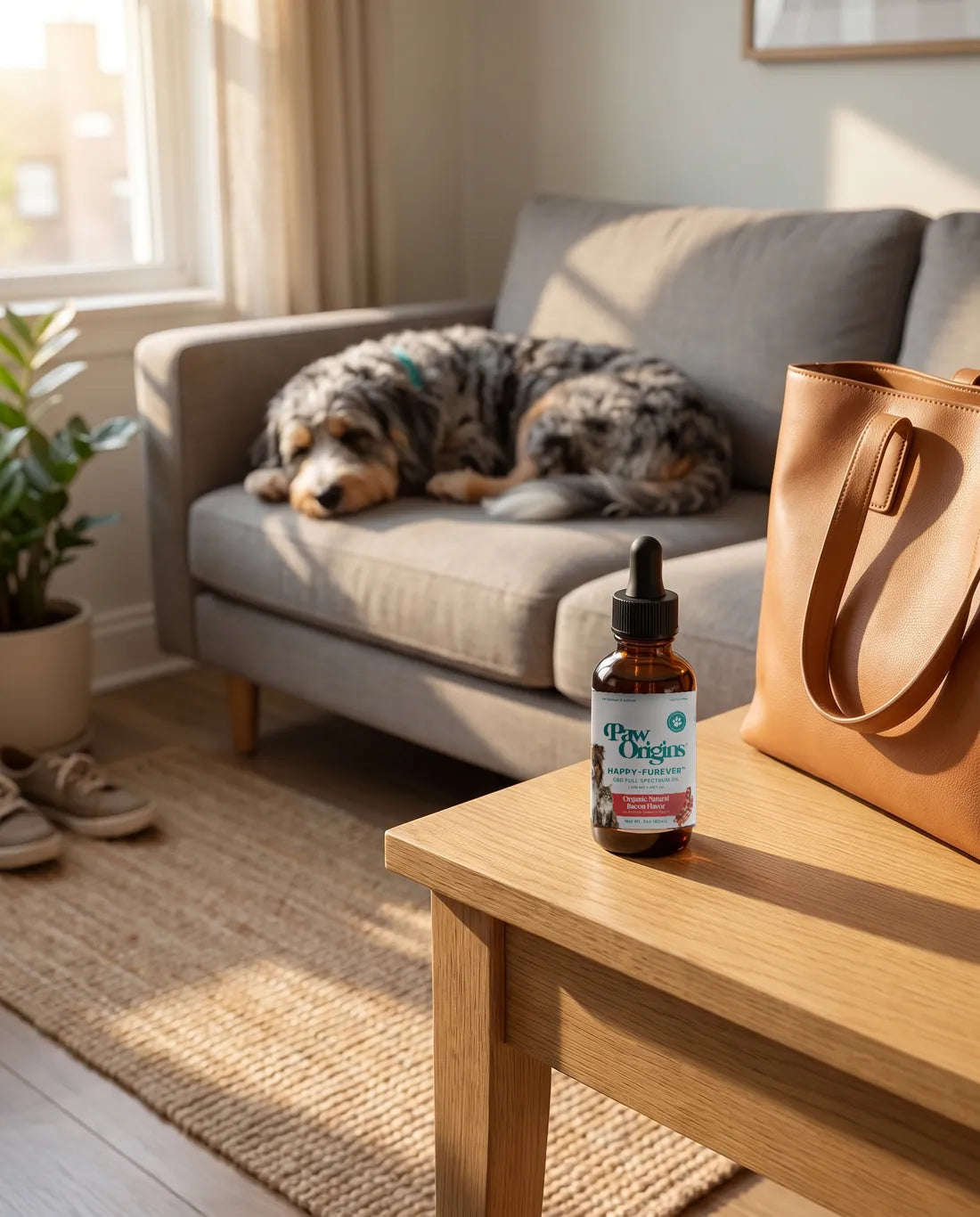
It's called Happy-Furever®
Oil.
The first full-spectrum formula built to support a dog's endocannabinoid system and help a departure alarm stand down, developed around the research above.
Supports the Departure Alarm. Active compounds interact with ECS receptors in the brain, supporting the stand-down signal that tells the alarm it's safe to settle.
Supports Calm While You're Out, Without Sedation. Helps your dog settle after the door closes and stay settled, through the body's own calming system instead of a sedative.
Preserves Personality and Joy. Because it works through the dog's own calming system instead of suppressing the whole nervous system, your dog stays fully themselves: playful, curious, and still at the door when you get home. Just calmer while you're gone.
No prescription. No sedation. No waitlist for a specialist.
HERE'S EXACTLY HOW IT WORKS, WEEK BY WEEK
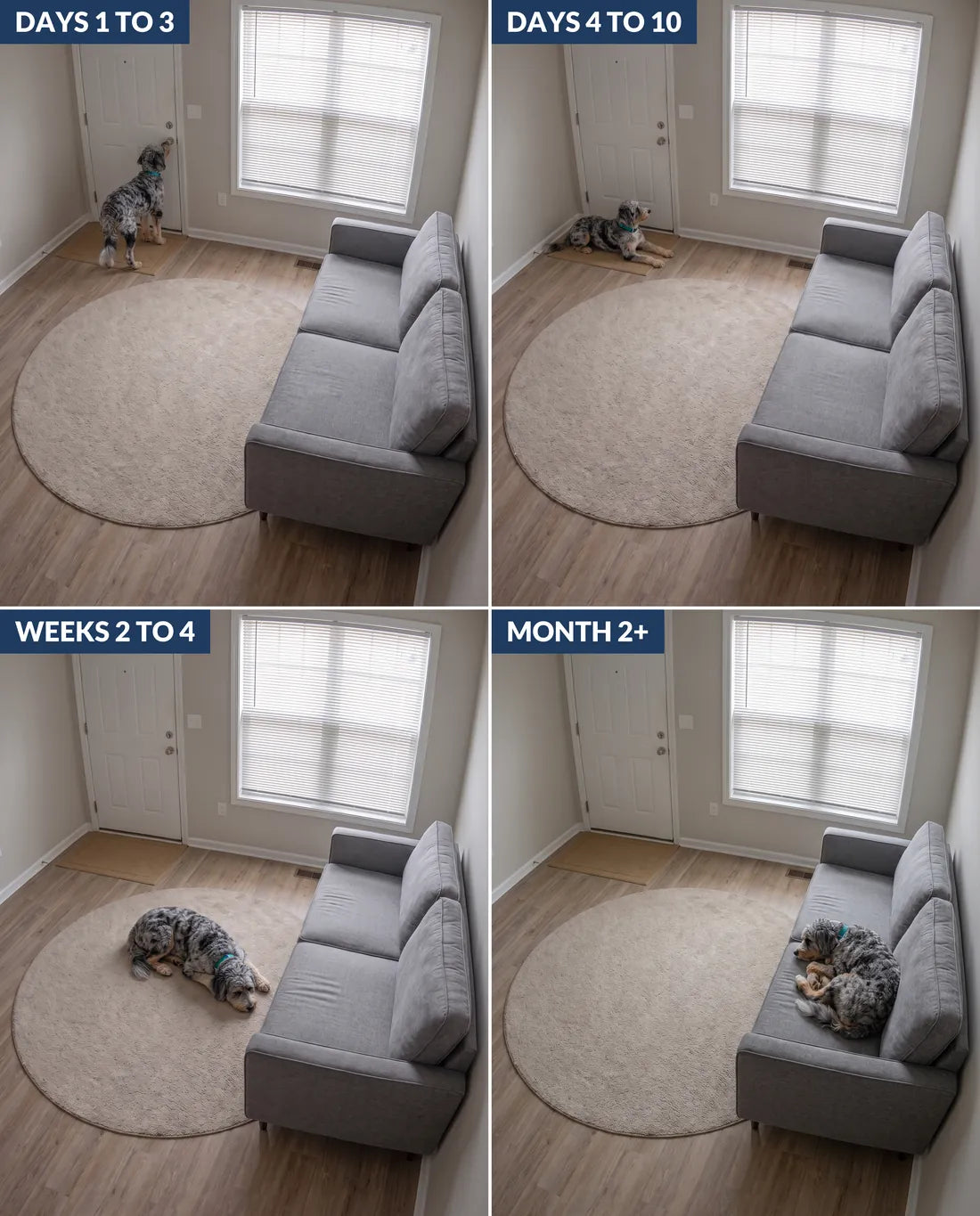
Days 1 to 3: Your dog may be a little calmer through the goodbye. The ECS is beginning to receive support but hasn't fully recalibrated yet.
Days 4 to 10: This is where many owners start to see it on the camera. Shorter bouts of crying after the door closes, and quicker to settle.
Weeks 2 to 4: The compound effect kicks in. Many owners report they can leave for longer: a full grocery run, a dinner out, a whole day at the office.
Month 2 and beyond: A dog who naps while you're out. This isn't sedation. This is what an alarm that can stand down looks like.
Daily support works best alongside short practice absences. Step out for a few minutes, come back calmly, and stretch it out a little each day. The oil supports the calm. The practice teaches your dog that you always come back.
THE RESULTS THAT HAVE THE INDUSTRY PAYING ATTENTION
- 22% of dogs in a Dogs Trust study of 1,807 UK dogs had at least one sign of separation-related behavior reported by their owners, in February 2020, before lockdown changed anyone's routine.
- 1 in 10 dogs in that study who showed no signs before lockdown were showing new ones by October 2020, and the dogs whose time alone had dropped the most were at higher risk.
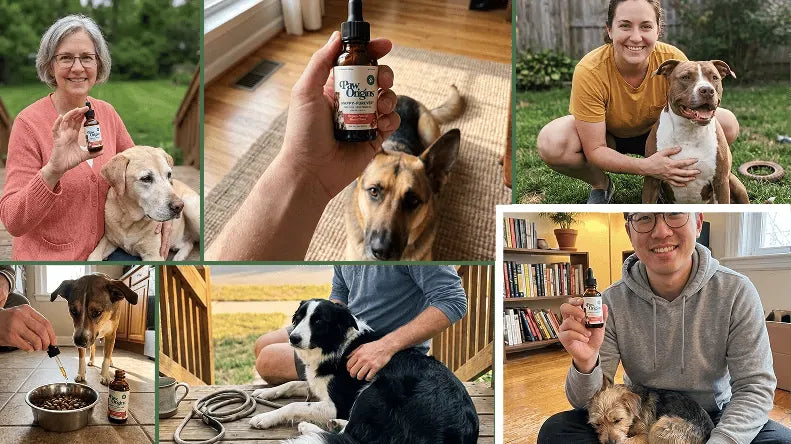
- 4.8 stars across more than 780 verified reviews, and dozens of them are about dogs who couldn't be left alone.
- PawOrigins is working toward helping 1 million dogs by 2030, including active partnerships with rescue shelters nationwide.
Rachel C., Verified Buyer - ★★★★★
"She had terrible separation anxiety to the point I was giving her trazodone when I had to leave to work otherwise she bark non stop... I couldn't leave for anything besides work and going to the store and I felt isolated... this CBD actually calmed her anxiety. I was able to do some separation training and now she is in a great place and I can leave for more than work and groceries."
Verified Buyer - ★★★★★
"I live in an apartment where I had gotten a call from the property manager that my dogs were crying... Both have bad separation anxiety. Like destructive and breaking out the kennel bad... they appear to sleep on camera when I'm gone and I have not gotten another call from management yet."
Leah, Verified Buyer - ★★★★★
"This is the first thing to ever help my separation anxiety ridden pup!... Prior to using I would check our doggy camera and he'd be in his crate panting, sitting up and sometimes barking. Now with this oil, every time I check he is laying down and not barking."
Caryl Lynne H., Verified Buyer - ★★★★★
"My young Rottie has horrible separation anxiety but consistent use of this product he now stays calm when I load books into my car and doesn't full body tackle me when I come in! He is alert, active, and playful, but no longer stressed pacing and licking or destructive !!"
Verified Buyer - ★★★★★
"Since taking Happy-Furever CBD oil, our dog is almost unrecognizable. He is no longer howling every night, barking at every little thing and following us from room to room. He actually appears to be more calm and relaxed."
WHAT MANAGING THIS REALLY COSTS
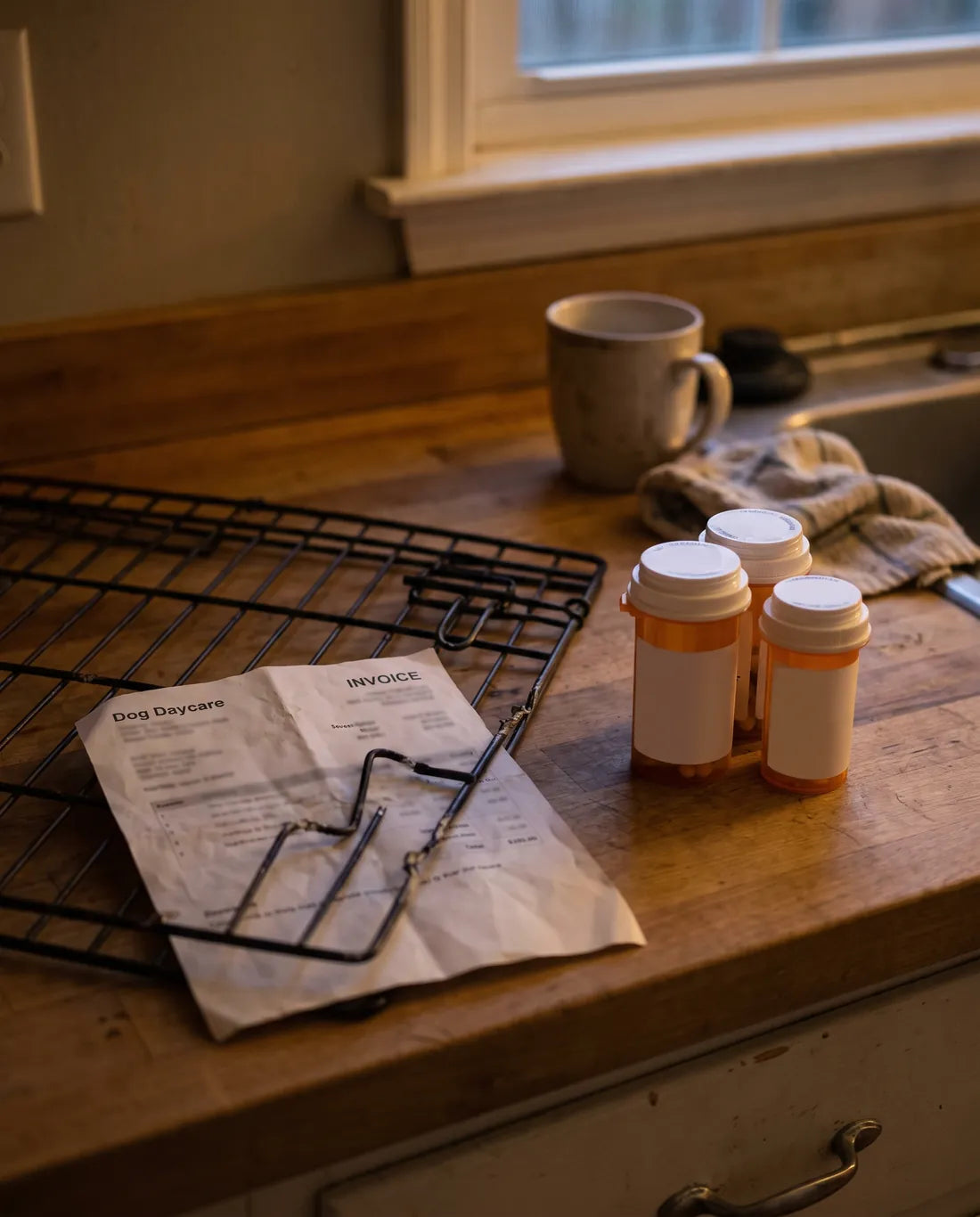
Let me show you what managing a dog who can't be left alone really costs.
The "Never Leave Them" Route
- Dog daycare 4 to 5 days a week: around $40 a day, or $680 to $880 a month
- Or a midday dog walker instead: about $21 a walk, $365 to $470 a month
- A pet camera to watch it happen from work: $47 to $80
- Repairs: new blinds at $55 to $170 a window, a heavy-duty escape-proof crate at $579, and a $100 to $500 pet deposit you may not see again
- Total: $365 to $880 a month in walkers or daycare alone, plus the camera, the repairs and the deposit
The Medication Route
- Generic fluoxetine: about $21 a month for one 20 mg tablet a day
- Brand-name Clomicalm (clomipramine): roughly $70 to $140 a month, depending on your dog's size
- A veterinary behaviorist consult or separation-anxiety training program: $580 to $1,180 to get started
- Recheck visits: $56 to $129 each
- And the labels on both FDA-approved separation anxiety drugs (Clomicalm in 1998, Reconcile in 2007) say they're meant to be used alongside behavior modification. The training bill comes either way
- Total: $650 to $1,300+ to get started, then $21 to $140 a month in pills, indefinitely, managing the panic without supporting the alarm
Happy-Furever® Oil
- One bottle, full-spectrum, no prescription required
- From $0.81 a day, so a month of support costs less than a single day of daycare
A full-spectrum formula concentrated enough to reach ECS receptors in a meaningful dose, backed by veterinary research, is the kind of product that could reasonably sit at premium pricing. And in a sense, it does: our full retail price on a single bottle is $110.
But that's not what you'll pay today.
WHY WE'RE PRICING IT THE WAY WE ARE

Here's the honest answer.
Every owner who gets their life back the way Rachel, Leah and Caryl Lynne did above is proof of exactly the thing a medicate-and-crate, recurring-visit model doesn't want proven at scale.
So instead of pricing this the way a specialty vet clinic would, we've made it accessible enough that cost is never the reason an owner doesn't try it.
Happy-Furever® Oil's regular price is $110.
Today, in our Fall Sale, you can save up to 60%, from just $0.81 a day, with free shipping and a free $149 gift included.
Less than one day of daycare for a month of support. For a formula that supports the departure alarm instead of sedating your dog through it.
LOOK, I UNDERSTAND THE SKEPTICISM
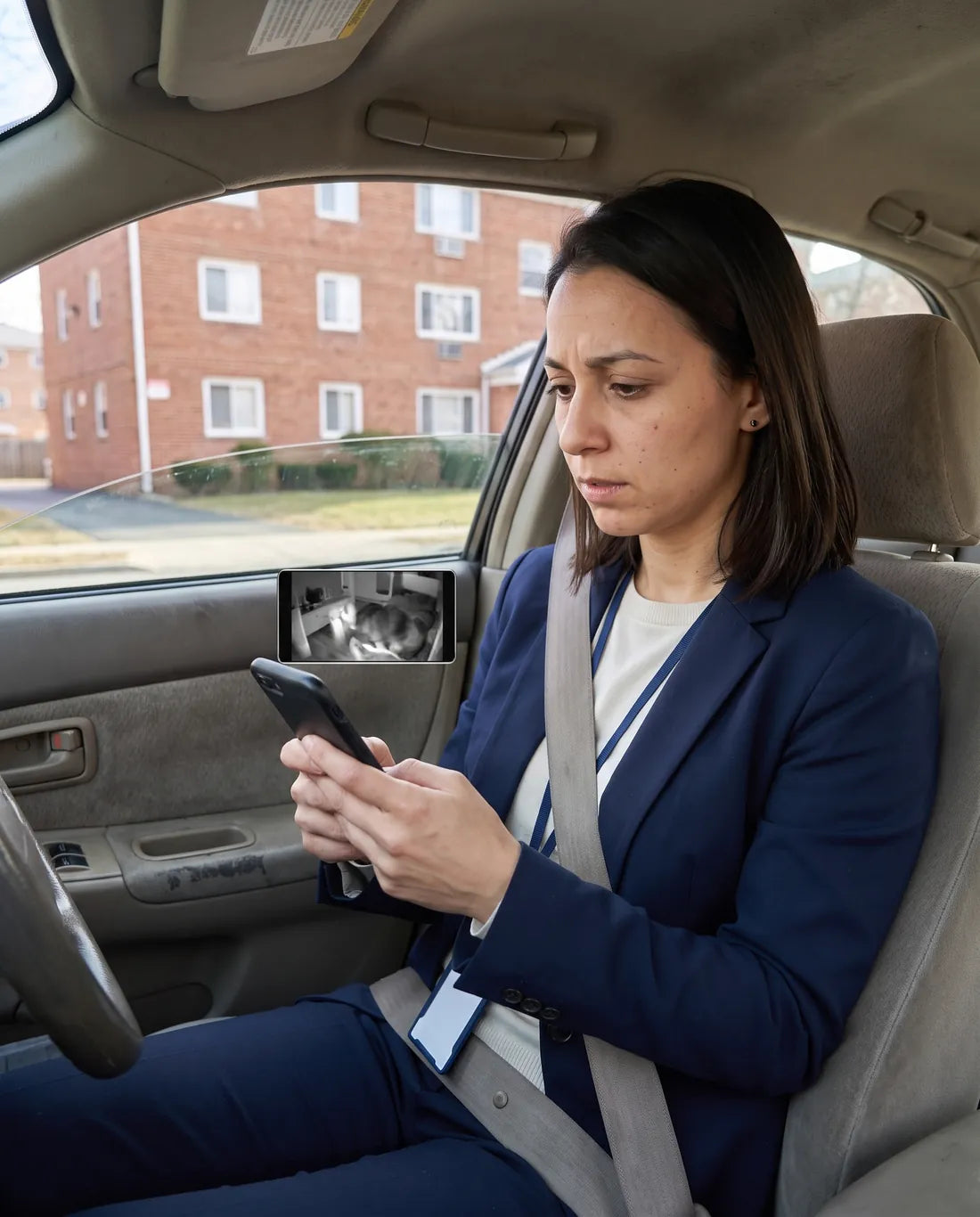
You've been down this road before. The crate he fought. The camera you can't stop checking. The Kong he never touched. Daycare five days a week. The trainer who told you to be patient.
You've felt hope, then watched the same howl on the same camera on your lunch break.
So here's my promise.
Give Happy-Furever® Oil every single day, with breakfast before you leave, for the next 30 days.
Watch the goodbyes get quieter. Watch your dog stay themselves while it happens.
And if your dog isn't calmer, we'll refund you.
Our Money-Back Guarantee

As a sign of confidence in this formula, PawOrigins backs Happy-Furever® Oil with our Money-Back Guarantee.
If you purchase from an official PawOrigins website, use it as directed, and aren't completely satisfied, contact PawOrigins' US-based support team for a refund.
Why am I confident recommending this?
Because it's rated 4.8 stars across more than 780 verified reviews, and the pattern in the ones about dogs left alone is remarkably consistent: calmer goodbyes, a quieter camera, the same dog at the door.
Support: For guarantee claims or questions, contact PawOrigins' US-based support team through the official site.
ONE MORE THING
With the holidays ahead, Happy-Furever® Oil is in record demand. Current inventory at Fall Sale pricing is limited.
We're down to roughly 1,200 bottles at today's pricing. Our production run is capped, and once this batch sells through, pricing goes back to the regular $110.
If you're reading this, bottles are still available at this price. I can't promise they will be tomorrow.
A word on timing: the holidays mean more time out of the house than any other stretch of the year: parties, shopping, travel, the office party. The ECS takes a few weeks to settle into a new rhythm, so start 3 to 4 weeks before the next long day out. For most people, that's now.
One more thing worth knowing. Happy-Furever® Oil is not sold on Amazon. What shows up there under similar names is not our formula, not our concentration, and not lab-tested the way ours is. The only place to get the genuine product is through PawOrigins' official website.
Every week you wait is another week of:
- Another day watching the camera instead of working
- Another invitation turned down
- Another note from the neighbors
THE CHOICE

Path #1: Keep Building Your Life Around the Door Keep racing home at lunch, paying for daycare you can't stop, and checking the camera between meetings. Keep saying no to the things you used to say yes to.
Path #2: Support the Departure Alarm Give your dog's own calming system the support it needs to stand down. Watch the goodbyes get quieter and your world get bigger again, without losing the dog who meets you at the door.
HERE'S EXACTLY WHAT TO DO NEXT
Click the button below to check current availability
- Start today. Many owners report calmer goodbyes within 7 to 10 days
- Email your results to Dr. Dench's team, we love hearing these stories
Don't wait for the next long day out. Give your dog the same chance thousands of other owners have taken.
Click below and let's make leaving the house easy again.
You can take advantage of this pricing today only, before it returns to full price.
SEE IF HAPPY-FUREVER® OIL IS RIGHT FOR YOUR DOG →INTERNET ONLY OFFER!
FOR A LIMITED TIME: Save Up To 60% + Free Shipping

To you and your furry family,
Dr. Kathryn Dench, MA VetMB, MRCVS
Chief Scientific Advisor, PawOrigins
P.S. Milo still waits at the window at 5:30. That's the whole point: not a sedated dog, one who naps until you're home.
P.P.S. Happy-Furever® Oil is lab-tested, made in the USA, and formulated by a Cambridge-trained veterinarian who put her name on the research. We built it the right way.